

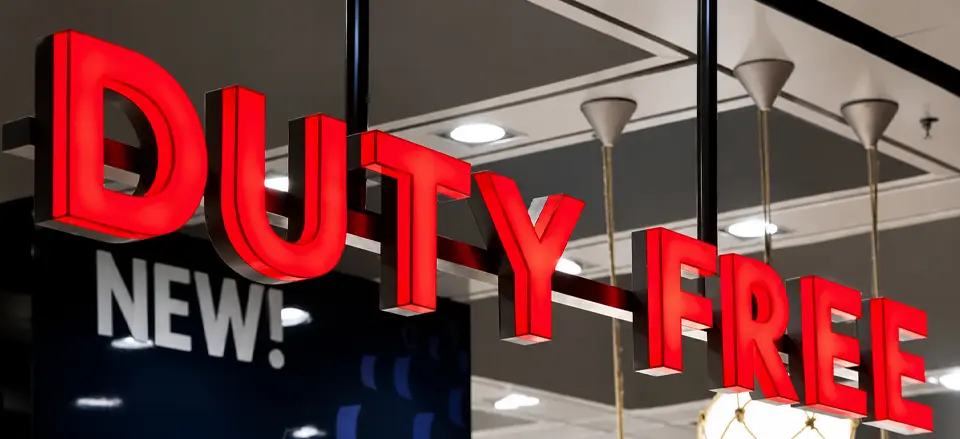
Duty Free Europe Complete Guide
Europe is one of the world’s most popular travel regions, welcoming millions of international passengers for holidays, business trips and family visits. For many travellers, shopping at the airport is an important part of the journey. European terminals offer extensive retail areas where passengers can browse fragrances, cosmetics, confectionery, spirits, cigarettes and heated tobacco products before departure.
Despite the popularity of airport retail, duty free shopping remains widely misunderstood. Many travellers assume that every airport in Europe follows the same rules or that any product bought after security is automatically tax free. In reality, eligibility depends on the route, destination, customs territory and type of product being purchased.
Understanding these differences before travelling helps passengers avoid unexpected charges, confiscation or delays at customs. It also makes it easier to compare prices and remain within the allowance limits that apply at the final destination.
Customers interested in viewing products before travelling can explore BurnArea’s complete Duty Free Shop.
Understanding Duty Free Shopping Across Europe
Duty free shopping allows eligible international passengers to purchase certain products without some of the domestic taxes or duties normally included in regular retail prices. These purchases are usually available in designated international travel areas, including:
airports;
ferry terminals;
cruise ports;
border crossings;
selected international rail terminals.
However, buying a product from a duty free store does not automatically mean that an unlimited quantity can be carried into another country. The destination country’s import allowance still applies.
Products Commonly Sold Duty Free
European duty free stores commonly offer:
cigarettes and other tobacco products;
heated tobacco sticks;
perfumes and fragrances;
skincare and cosmetics;
alcoholic beverages;
chocolates and confectionery;
watches and accessories;
travel-exclusive gift sets.
Travellers interested specifically in tobacco products can browse BurnArea’s Duty Free Cigarettes collection.
What Does “Duty Free” Actually Mean?
The term “duty free” means that certain local taxes or customs duties have not been included in the sale price because the product is being sold under international travel conditions.
The exemption normally applies only when:
the buyer is travelling internationally;
the destination qualifies under the retailer’s duty free rules;
the product leaves the relevant customs territory;
the purchase remains within applicable legal limits.
Duty Free Does Not Mean Customs Free
A product may be purchased without local departure taxes but still be subject to customs rules when the passenger enters the destination country.
For example, a traveller may legally purchase several cartons of cigarettes at an airport but still exceed the tobacco allowance upon arrival. In that situation, the traveller may need to declare the goods and pay additional duties.
Duty Free and Tax Free Are Different
The terms “duty free” and “tax free” are often used as though they mean the same thing, but they describe different purchasing systems.
Duty Free Shopping
Duty free products are usually sold inside designated international travel zones. Certain taxes or duties are removed before the customer pays.
Common examples include:
airport duty free stores;
ferry terminal shops;
cruise port retailers;
border retail locations.
Tax Free Shopping
Tax free shopping normally refers to VAT refund programmes for eligible visitors purchasing goods from ordinary retail stores.
The customer usually pays the full price first and then applies for a refund by:
keeping the original receipt;
requesting the required tax form;
presenting the goods when leaving;
obtaining customs validation;
submitting the approved documents to the refund provider.
Why European Duty Free Rules Can Be Confusing
Europe does not operate under one single customs arrangement for every journey. Some countries belong to the European Union, others belong to the wider European Economic Area, and several European destinations maintain separate customs systems.
The applicable rules can depend on:
the departure country;
the arrival country;
whether both countries are EU members;
whether the journey leaves the EU customs territory;
the type and value of the goods;
the passenger’s personal allowance.
The Route Matters More Than the Airport
Two passengers shopping in the same airport may receive different duty free eligibility depending on where they are flying.
A traveller departing for another EU country may face different retail conditions from a traveller departing for a non-EU destination, even when both passengers use the same terminal.
Travelling Within the European Union
Travelling between EU member states is generally treated differently from entering the EU from an outside country.
Passengers travelling entirely within the EU often purchase goods on a tax-paid basis rather than under traditional duty free conditions. Personal-use rules may apply, but authorities can still question unusually large quantities.
For a broader explanation, read Duty Free Rules Europe.
Personal Use and Commercial Quantities
Customs authorities may consider several factors when determining whether goods are intended for personal use:
the quantity carried;
how the products are packaged;
how frequently the traveller crosses the border;
whether proof of purchase is available;
whether the goods appear intended for resale.
Travelling Between EU and Non-EU Destinations
Duty free eligibility is usually clearer when a traveller is leaving the EU customs territory for a non-EU destination.
In these cases, airport stores may offer eligible products without certain domestic taxes. However, the arrival country’s import limits still determine how much can be brought in without additional charges.
Examples of Non-EU European Destinations
European destinations outside the EU customs framework may include countries such as:
the United Kingdom;
Switzerland;
Türkiye;
Serbia;
Albania;
Georgia;
Armenia.
Rules differ by destination, so travellers should always check official customs guidance before departure.
Tobacco Products and Duty Free Allowances
Tobacco products are among the most regulated duty free purchases. Allowances commonly apply to cigarettes, cigars, cigarillos, smoking tobacco and heated tobacco products.
A traveller may be allowed one category or a proportional combination of several categories, depending on the destination rules.
Why Tobacco Limits Are Strict
Tobacco limits exist because these products are heavily taxed and regulated in most countries. Carrying more than the permitted allowance may result in:
declaration requirements;
import taxes;
customs duties;
product seizure;
administrative penalties.
Travellers entering the United Kingdom can review How Much Tobacco Can You Bring into the UK? for more detailed guidance.
Customs Declarations
Travellers are responsible for declaring goods when required. Passing through the green customs channel generally means confirming that nothing requiring declaration is being carried.
When a Declaration May Be Required
A customs declaration may be necessary when:
the tobacco allowance is exceeded;
the total value of goods is above the permitted threshold;
goods are intended for resale;
restricted products are being transported;
customs officers request additional information.
Keeping receipts can help demonstrate where and when the products were purchased.
Planning Before You Shop
A few minutes of preparation can prevent difficulties later.
Before buying duty free products, travellers should check:
destination customs allowances;
airline baggage rules;
liquid restrictions;
connecting-airport security procedures;
product availability;
local import restrictions.
Check the Final Destination
The most important rules are generally those enforced by the country where the traveller clears customs.
Passengers with connecting flights should also confirm whether they will pass through security or customs during transit.
Common Duty Free Shopping Mistakes
Travellers often encounter problems because they rely on assumptions rather than current official rules.
Assuming Every European Country Has the Same Limit
European tobacco allowances vary by destination and route. A quantity permitted in one country may exceed the allowance in another.
Ignoring Transit Restrictions
Passengers carrying liquids or sealed duty free bags through connecting airports may be subject to additional security checks.
Losing the Receipt
Receipts can be important when proving the purchase location, value and date.
Buying More Because the Price Is Lower
A lower price does not increase the legal import allowance. Customs limits apply regardless of the amount paid.
BurnArea for International Customers
Many travellers also prefer ordering authentic products before or after travelling rather than relying solely on airport availability.
BurnArea provides access to a carefully organised catalogue of authentic tobacco products, allowing customers to compare brands and review detailed product information before placing an order.
Visitors can explore the complete Duty Free Shop or browse individual cigarette collections according to their preferred brands.
Duty Free Shopping for Frequent Travellers
Passengers who travel regularly often develop a shopping strategy rather than making spontaneous purchases.
Experienced travellers commonly:
compare airport prices before travelling;
review customs allowances in advance;
purchase only quantities permitted by law;
keep receipts until the journey has ended;
monitor airline baggage policies;
leave sufficient time for airport shopping before boarding.
These simple habits help reduce unnecessary delays during international travel.
Planning Ahead Saves Time
Reviewing customs regulations before arriving at the airport is generally much easier than trying to resolve questions after reaching border control.
Travellers who prepare in advance usually experience a smoother journey from departure to arrival.
Understanding Customs Inspections
Most passengers pass through customs without difficulty, but customs officers retain the authority to inspect luggage when necessary.
An inspection does not automatically indicate that a traveller has done anything wrong. Officers may simply verify that imported goods comply with current regulations.
What Customs Officers May Request
Depending on the circumstances, officers may ask travellers to provide:
proof of purchase;
identification;
travel documents;
information regarding the destination;
clarification about the intended personal use of the products.
Answering questions clearly and honestly usually helps complete the inspection efficiently.
Duty Free Shopping and Tobacco Products
Tobacco remains one of the most popular categories purchased in European duty free stores. However, because tobacco products are highly regulated, passengers should always understand the applicable import limits before travelling.
BurnArea offers an extensive catalogue of authentic tobacco products for adult smokers who wish to compare products before purchasing.
Customers can browse the complete Duty Free Cigarettes collection to explore internationally recognised brands.
Heated Tobacco Products
In addition to traditional cigarettes, many travellers also purchase heated tobacco products where permitted by local regulations.
BurnArea provides a dedicated IQOS Sticks category featuring a variety of authentic heated tobacco products.
Availability may vary depending on destination and applicable regulations.
Useful Resources for Travellers
Travellers interested in learning more about duty free shopping can explore additional guides available through BurnArea.
If you are researching tobacco prices across Europe, our guide to Cheapest Duty Free Cigarettes in Europe provides useful comparisons between popular travel destinations.
Passengers travelling to the United Kingdom should also review How Much Tobacco Can You Bring into the UK? before departure.
These resources are regularly consulted by travellers preparing for international journeys.
About BurnArea
BurnArea is an international duty free retailer offering authentic tobacco products for adult smokers together with informative travel resources designed to help customers better understand customs regulations and international shopping.
Visitors can browse the complete Duty Free Shop, compare cigarette brands and explore detailed product information before placing an order.
The website also provides shipping information, payment guidance and educational articles covering a wide variety of travel-related topics.
Customer Support
Before placing an order, customers are encouraged to review the information available on the FAQs page.
Additional information regarding order processing, delivery methods and shipment tracking can be found in the Shipping Policy.
Payment procedures, accepted payment methods and transaction guidance are explained in the Payment Policy.
Final Thoughts
Duty free shopping throughout Europe offers travellers an excellent opportunity to purchase a wide variety of internationally recognised products before departure. Nevertheless, successful duty free shopping depends upon understanding the customs regulations that apply both at departure and at the final destination.
Planning ahead, reviewing official customs guidance and remaining within applicable import allowances can help travellers avoid unnecessary complications while enjoying the benefits of international duty free shopping.
Whether you are comparing airport retailers, researching tobacco allowances or preparing for your next international journey, understanding the rules before travelling is always the most effective approach.










Add comment
You must be logged in to post a comment.